Buccal Massage vs TMJ Massage: What’s the Difference?
Sep 27, 2026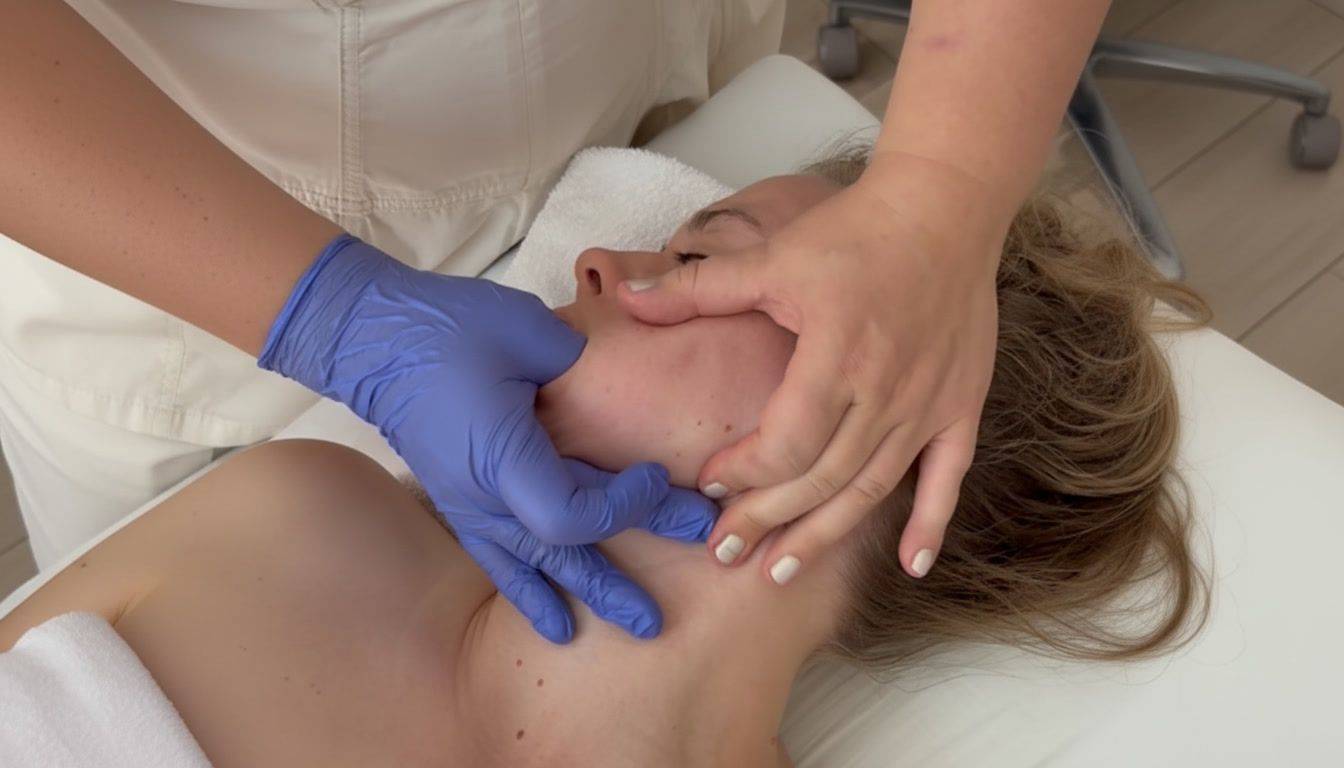
Is Buccal Massage the Same as TMJ Massage?
No. Buccal massage and TMJ massage are not the same thing, although the techniques can overlap.
Buccal massage usually refers to intraoral massage performed through the inside of the cheek, often combined with external facial and jaw work. TMJ massage is a broader term commonly used for manual work focused on the jaw and the muscles involved in chewing and jaw movement.
Understanding the difference starts with a little anatomy.
TMJ vs. TMD: What Do These Terms Mean?
The TMJ, or temporomandibular joint, is the joint connecting the lower jaw to the skull. There is one TMJ on each side of the face.
TMD is different. According to the National Institute of Dental and Craniofacial Research:
“TMDs refers to the disorders, and TMJ refers to the temporomandibular or jaw joint itself.”
TMD, or temporomandibular disorders, is a group of more than 30 conditions involving the jaw joint, the muscles controlling jaw movement, or both.
National Institute of Dental and Craniofacial Research: TMD Overview
This distinction is important because what is commonly called “TMJ massage” is usually not massage of the joint itself. Manual work is more often directed toward the surrounding muscles and soft tissues associated with jaw movement.
What Is Buccal Massage?
Buccal massage is commonly used to describe a facial massage technique that includes work inside the mouth. The practitioner typically wears gloves and accesses the cheek and surrounding soft tissues intraorally while also working externally on the face and jaw.
The buccinator muscle is particularly relevant to buccal massage. It forms an important muscular component of the cheek and assists mastication by keeping food positioned within the oral cavity.
Buccal massage may be incorporated into facial sculpting, aesthetic facial massage, or more functionally focused intraoral work depending on the practitioner's training and scope of practice.
What Is TMJ Massage?
“TMJ massage” is not one single standardized technique.
The term is often used to describe manual therapy or massage directed toward the muscles associated with jaw movement and jaw tension.
The primary muscles of mastication include the:
masseter, temporalis, medial pterygoid, and lateral pterygoid.
These muscles coordinate movements of the mandible, including closing, opening, protrusion, retrusion, and side-to-side movement.
NCBI Bookshelf: Anatomy of the Muscles of Mastication
The masseter and temporalis are especially important in external jaw massage. Intraoral techniques may provide access to additional tissues that cannot be approached in the same way externally.
Where Do Buccal Massage and TMJ Massage Overlap?
This is where the terminology can become confusing.
A practitioner performing jaw-focused massage may use both external and intraoral massage techniques. Buccal massage may also involve tissues closely related to jaw movement.
For example, a session may include work with the masseter externally, the temporalis around the side of the head, and selected cheek or jaw tissues intraorally.
In that situation, some of the techniques may look similar.
The purpose and overall approach, however, may be different.
Buccal facial massage may be performed primarily as part of a facial massage or sculpting protocol. Jaw-focused manual work is generally centered more specifically on the muscles and soft tissues associated with mandibular movement, clenching, or muscular jaw tension.
Can Buccal Massage Help With Jaw Tension?
Intraoral techniques can be part of manual work for the muscles associated with jaw movement, but it is important not to equate buccal massage with treatment for every TMJ or TMD problem.
TMD includes both muscular and joint-related conditions. Jaw pain can also have different causes, which is why persistent pain, locking, significant restriction of movement, or other concerning symptoms should be evaluated by an appropriate medical or dental professional.
Research does suggest that manual therapy may help some people with TMD symptoms, particularly pain and limited mouth opening. A systematic review of randomized controlled trials found that results varied depending on the manual therapy technique used.
A more recent systematic review also found that manual therapy was associated with short-term improvements in pain and mouth opening, while noting that differences among techniques and studies make it difficult to draw conclusions about which specific approach is superior.
PubMed: Manual Therapy for TMD Pain and Limited Range of Motion
Importantly, research on manual therapy for TMD should not automatically be interpreted as research specifically proving the effectiveness of cosmetic buccal massage. They are overlapping areas, but they are not interchangeable.
So, Is Buccal Massage the Same as TMJ Massage?
No, but there can be significant overlap.
Buccal massage describes an intraoral approach to the cheek and surrounding facial tissues. TMJ or jaw massage is a broader approach focused on the muscles and soft tissues associated with jaw function.
A professional working with the jaw may incorporate masseter massage, temporalis work, external facial massage, and intraoral techniques within the same session when appropriate.
For massage therapists and facial professionals, understanding the anatomy behind these techniques is more useful than relying on the name of a particular massage method.
Knowing the muscles of mastication, buccinator anatomy, TMJ anatomy, and relationships between the face, jaw, and neck makes manual work more intentional and helps professionals understand what they are actually working with beneath their hands.
At The Sculpt Lab Academy, buccal and intraoral massage education is built around this anatomy-first approach, with attention to professional scope, safe technique, contraindications, sanitation, and the relationship between intraoral and external facial work.
This article is intended for educational purposes and does not provide medical diagnosis or treatment advice. Persistent jaw pain, joint locking, trauma, or significant changes in jaw movement should be evaluated by an appropriate healthcare professional.